Stress shows up everywhere in modern life—traffic jams, deadlines, difficult conversations, sleepless nights. Our nervous system doesn’t know the difference between these daily frustrations and actual danger, so it reacts the same way: with a surge of stress hormones, racing heart, and tense muscles.
Fortunately, there’s a simple way to interrupt this stress response in seconds: the sighing breath.
What Is the Sighing Breath?
Think about the last time you cried deeply. After sobbing, your body naturally released a long, shaky exhale. Or remember finishing something difficult and collapsing onto the couch with a deep sigh. That wasn’t just habit—it was your body’s built-in way of letting go of tension.
The sighing breath is this natural reset, done with intention.
How to Practice It:
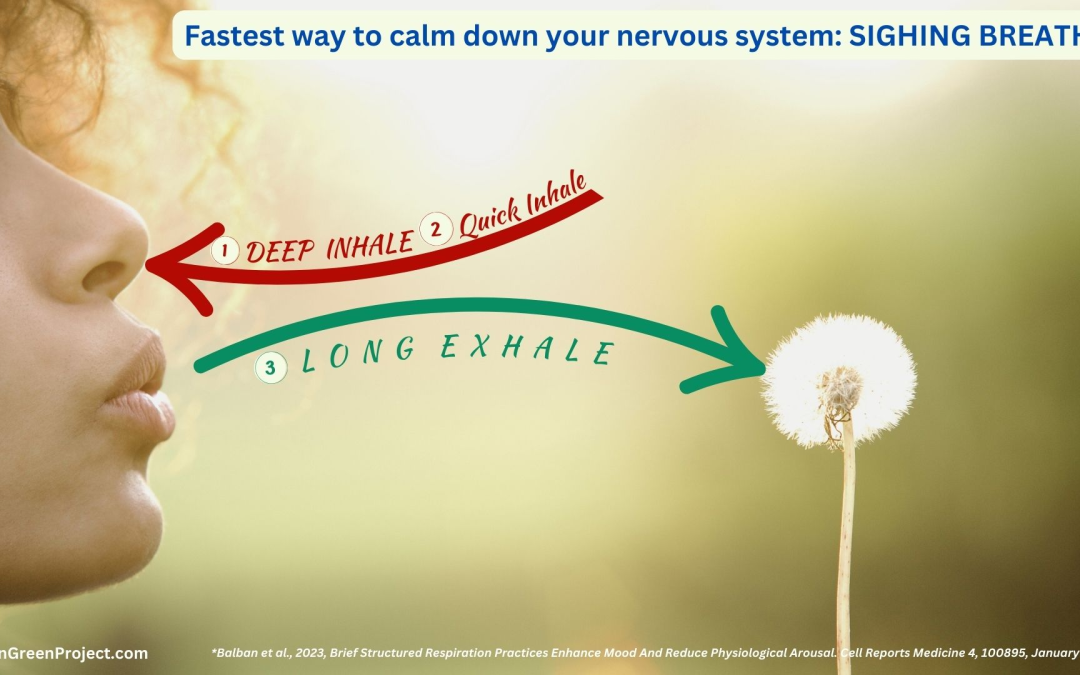
- Inhale fully through your nose.
- Take a smaller sip of air on top of that first breath to expand your lungs completely.
- Exhale slowly and completely through your mouth, like a deep sigh of relief.
Repeat two or three times.
Why It Works
When you sigh like this, you flip a switch in your nervous system. The long exhale activates the parasympathetic branch—your “rest and recover” mode—turning off fight-or-flight. Within moments, your body starts to relax: heart rate slows, muscles soften, and your mind clears.
This isn’t just theory. Neuroscience research has confirmed that sighing breaths are one of the most efficient ways to reduce stress and regulate the body.
Your Built-In Reset Button
The best part? You can use this tool anywhere. Sitting in traffic. Before a stressful meeting. After an argument. Or when you’re lying awake at night.
Each sigh is like pressing “reset.” It tells your body: You’re safe now. It’s okay to let go.